How Rising Rainfall Is Reshaping Gutter Standards in the Triangle
Standing water behind your gutters might seem minor at first glance—but it often signals deeper drainage problems that lead to rot, mold, or foundation damage. In the Cary and Apex area, the Raleigh area, and surrounding parts of the Triangle, rising humidity and increased rainfall make proper gutter flow more critical than ever. Here’s how to spot the issues early and address them with proven, expert-backed solutions.
Common Causes of Gutter Overflow
- Clogged downspouts: Leaves, pine needles, and roof granules can block water flow.
- Improper slope: Gutters that don’t pitch correctly trap water instead of draining it.
- Shingle overhang: Excessive overhang can cause water to skip the gutter entirely. A shingle overhang that is too short can also lead to water getting behind the gutters.
- Missing drip edge: Without flashing, water can sneak behind the gutter and soak the fascia.
- Clogged outlets: Even with clean gutters, debris at the outlet (where water exits into the downspout) can choke the system and cause backups.
Why 4-Inch Gutters May No Longer Be Enough
The Triangle area has seen a measurable increase in annual rainfall in recent years, with more intense storms and heavier downpours. Because of this shift, 4-inch gutters are often undersized for homes in the Cary and Apex area, the Raleigh area, and nearby communities. 6-inch seamless gutters are the new standard, offering nearly double the capacity and better control of high-volume runoff—especially helpful for homes with complex rooflines or heavy tree coverage.
How to Spot the Warning Signs
- Peeling paint or water stains on fascia boards
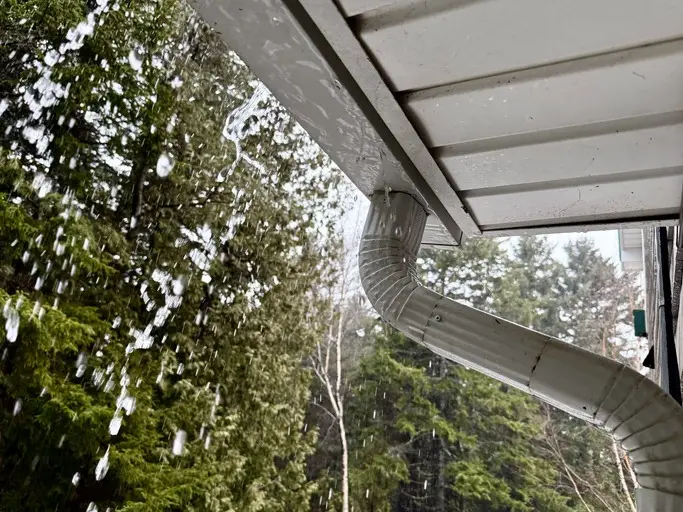
- Overflowing gutters during moderate rain
- Puddles or erosion near your foundation
- Visible gaps between gutter and roof edge
If you notice any of these, it’s time to act before the next storm rolls through the Raleigh area or beyond.
Solutions That Work
- Install gutter guards: Reduce debris buildup and minimize clogs.
- Adjust slope and hangers: Ensure water flows toward downspouts without pooling.
- Add a drip edge: Guide water cleanly into the gutter and protect fascia boards.
- Upgrade to 6-inch gutters: Handle increased rainfall and reduce overflow risk.
- Inspect and clear outlets: Ensure water exits freely into downspouts without obstruction.
- Schedule seasonal cleanings: Twice a year—especially after fall and spring storms.
Local Considerations for Triangle Homes
Homes in the Pittsboro area and Cary/Apex region often sit under heavy tree cover, increasing leaf debris. Older neighborhoods in the Raleigh area may have outdated flashing or undersized gutters. Some newer builds skip drip edges altogether. No matter your location in the Triangle, proactive gutter care is key.
Frequently Asked Questions
Can water behind gutters cause roof damage?
Yes. Water that seeps behind gutters can rot fascia boards, compromise flashing, and even wick into roof decking over time.
Do I need a drip edge?
Absolutely. A drip edge is a simple metal flashing that directs water into the gutter. Without it, runoff can sneak behind the gutter and damage wood trim.
How often should I clean my gutters?
At least twice a year—once in late fall and again in early spring. More often if you have overhanging trees or heavy storms.
Internal Links
- Gutter Repair Services
- Roof & Edge Inspections
- Schedule Your Inspection
- Permit Requirements in the Triangle
External Resources
- NRCA Gutter Installation Guidelines
- EPA Stormwater Management Resources
- DOE Guide to Rain Gutters & Downspouts
Need Help?
Need a roof inspection? Contact Artisan Quality Roofing at (919) 906-3791. For gutter inspections and seamless gutter upgrades, reach out to Quality Seamless Gutters at (919) 444-5042. Both teams proudly serve the Cary and Apex area, the Raleigh area, Pittsboro, and surrounding communities across the Triangle.