Hail Damage Guide
Hail damage isn’t always dramatic—but it’s almost always dangerous. While some storms leave obvious dents and cracks, others quietly erode your roof’s defenses over time. This guide shows what to watch for, when to act, and where to get help in the Triangle.
📌 Quick Summary
In this guide you’ll find:
- What size hail causes real damage
- How hail damage progresses silently
- Signs to watch for after a storm
- When to file an insurance claim
- Local resources and next steps
🧊 What Size Hail Actually Damages a Roof?
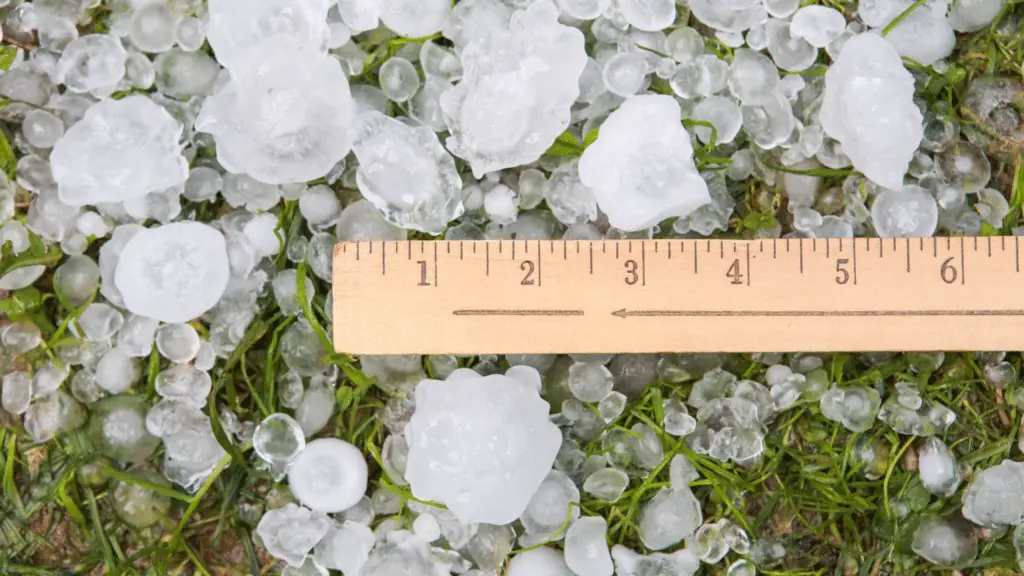
Hail size matters, but roof age, material, and prior wear do too. Even smaller hail can cause significant long-term harm on older or weathered roofs.
Hail Size Chart
| Hail Size | Diameter | Common Damage |
|---|---|---|
| Pea-sized | ¼ inch | Minor scuffing, cosmetic wear |
| Marble-sized | ½ inch | Granule loss on older shingles |
| Nickel-sized | ¾ inch | Dents in soft metals, granule displacement |
| Quarter-sized | 1 inch | Shingle fractures, bruising of underlayment |
| Ping Pong Ball | 1½ inch | Shingle tears, cracked tiles, metal deformation |
| Golf Ball | 1¾ inch | Severe bruising, structural damage |
| Hen Egg | 2 inch | Punctures in decking, skylight breakage |
| Softball | 4 inch | Catastrophic damage to roof, siding, windows |
👉 Even quarter-sized hail can compromise your roof’s integrity—especially if it’s older or already weathered. For an official reference, see the National Weather Service hail safety page: weather.gov/safety/hail.
🕒 Why Hail Damage Is a Slow-Moving Threat
Hail damage often begins as hidden bruising and granule loss. Over months or years, micro-fractures let moisture in and degrade the shingle’s protective layers.
- Granule loss reduces UV and weather protection
- Micro-fractures enable slow water infiltration
- Bruised underlayment reduces long-term roof resilience
- Repeated storms accelerate cumulative damage
Document storms using NOAA/Storm Events: ncdc.noaa.gov/stormevents.
🛠️ What to Do After a Hailstorm
Follow these immediate steps to protect your claim and your home:
- Document the storm: Take date-stamped photos of your roof, vehicles, siding, and outdoor equipment.
- Schedule a roof inspection: Have a qualified inspector check for bruising and granule loss.
- File your insurance claim early: Most policies have time limits and require timely documentation.
- Get a second opinion: If an inspector minimizes the issue, get another evaluation from a hail-specialist roofer.
Local guidance and severe-weather records can be found at the National Weather Service: weather.gov.
✅ Pro tip: Artisan Quality Roofing offers free hail inspections across the Triangle — Schedule an inspection
📍 Local Support You Can Trust
We serve homeowners across the Triangle, including Apex, Cary, Raleigh, and nearby communities. Our specialties:
- Hail damage inspections
- Insurance claim support and documentation
- Roof replacements and targeted repairs
- Mobile-first scheduling and photo documentation for claims
📞 Call us at 919-906-3791 or Schedule Your Inspection Now
❓ FAQs
- Can hail damage my roof even if I don’t see leaks?
- Yes. Most hail damage begins under the surface and can worsen without visible leaks.
- What size hail should I worry about?
- Anything ¾ inch or larger can cause real damage, especially on older roofs, though quarter-size hail often does measurable harm over time.
- How long do I have to file a hail damage claim?
- Times vary by policy and state, but many insurers expect notice within 6–12 months; confirm specifics with your carrier and document promptly. For guidance on disaster recovery resources, see https://www.ready.gov/recovering-disaster.
- Will insurance cover a full roof replacement?
- If damage is widespread and properly documented, insurance will often cover replacement; Artisan Quality Roofing provides inspection reports and claim support.
- Do I need a professional inspection?
- Yes. DIY checks commonly miss bruising and micro-fractures that only a trained inspector will spot.